
Selling an accountancy practice is a significant milestone that requires careful planning. The strongest sales don’t happen by chance, they’re built through preparation long before the practice goes to market.
Buyers today look beyond revenue, assessing profitability, client retention, operational efficiency, and long-term sustainability. Understanding how to prepare accountancy practice for sale can help you maximise value, attract the right buyers, and achieve a smoother transaction.
This guide outlines the essential steps to prepare your practice for a successful sale.
Key Takeaways
Before diving into the details, here are the most important points to remember:
- Start preparing your accountancy practice 12–36 months before your planned exit.
- Buyers assess much more than revenue, they evaluate profitability, recurring income, operational efficiency, and business risk.
- Reducing owner dependency significantly increases the transferability and attractiveness of your practice.
- Well-organised financial, legal, and compliance documentation helps speed up due diligence.
- Investing in systems, processes, and technology strengthens buyer confidence.
- A carefully planned transition protects client relationships and supports a successful handover.
- Working with a specialist advisor can help maximise value and improve the likelihood of a successful completion.
Why Preparation Matters Before Selling Your Accountancy Practice?
One of the biggest misconceptions among practice owners is that preparing for a sale begins once they’ve decided to exit. Preparation should start much earlier.
Giving yourself sufficient time allows you to strengthen the practice before buyers begin their assessment. It also gives you greater flexibility to address weaknesses, improve profitability, and build a business that is more attractive in the marketplace.
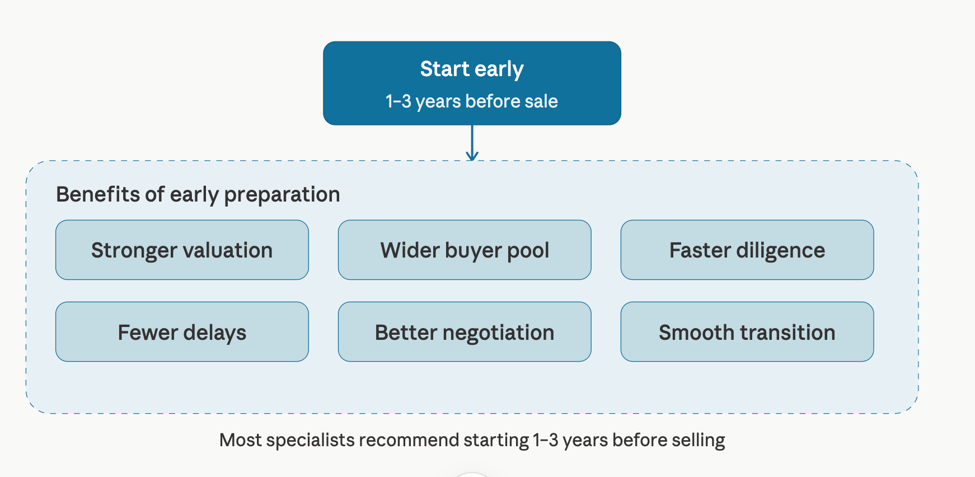
Preparing early offers several advantages, including:
- Achieving a stronger market valuation
- Attracting a wider pool of qualified buyers
- Completing due diligence more efficiently
- Reducing delays during negotiations
- Improving your negotiating position
- Creating a smoother transition for clients and employees
Most specialists recommend beginning preparations between one and three years before selling. This timeframe provides enough opportunity to implement meaningful improvements that buyers will recognise and value. Rather than reacting to the market, early preparation allows you to approach the sale strategically and on your own terms.
Understand What Buyers Are Looking For
Before deciding how to prepare accountancy practice for sale, it helps to understand how buyers evaluate opportunities.
Although financial performance remains important, buyers are increasingly focused on the long-term stability of the practice. They want confidence that revenue, clients, and employees will remain after the current owner steps away.
Typically, buyers evaluate several core areas:
-
Recurring Revenue
Reliable recurring fees create predictable cash flow and reduce uncertainty. Practices with stable recurring income are generally viewed as lower-risk investments.
-
Sustainable Profitability
Strong revenue alone isn’t enough. Buyers also assess how efficiently the practice converts revenue into profit while maintaining service quality.
-
Client Retention
Long-standing client relationships demonstrate trust and provide confidence that income is likely to continue after the acquisition.
-
Team Strength
A capable and experienced team reduces reliance on the owner and helps ensure continuity following completion.
-
Operational Efficiency
Well-documented processes, efficient workflows, and modern practice management systems allow buyers to integrate the practice more easily.
-
Growth Potential
Buyers also consider future opportunities, such as expanding services, increasing recurring revenue, or growing the client base.
Ultimately, buyers are not simply purchasing today’s income—they’re investing in tomorrow’s performance.
Assess the Current Value of Your Practice
Before making improvements, it’s important to establish where your practice currently stands.
A professional valuation provides an objective assessment of the business and highlights the factors influencing its value. It also identifies areas where improvements could increase buyer interest before the practice is brought to market.
A valuation typically considers:
- Annual recurring fees
- Revenue versus profitability
- Client concentration
- Client quality and retention
- Team structure
- Operational efficiency
- Market conditions
- Overall business risk
Many practice owners naturally associate value with years of hard work and reputation. Buyers, however, assess commercial performance and future sustainability. For example, two practices generating similar annual revenue may receive very different valuations because one has diversified clients, stronger profitability, and lower owner dependency.
Understanding your current valuation helps prioritise improvements that can positively influence the final sale outcome.
Strengthen Your Financial Performance
Financial performance remains one of the strongest indicators of a healthy business.
When buyers review a practice, they are looking for evidence of consistent profitability, reliable cash flow, and sustainable financial management. Well-managed financials reduce uncertainty and make the practice easier to evaluate.
Before selling, consider reviewing:
- Profit margins
- Operating expenses
- Outstanding debtor balances
- Recurring service income
- Pricing structure
- Financial reporting processes
Improving profitability doesn’t necessarily require significant revenue growth. Sometimes reducing unnecessary costs, improving operational efficiency, or increasing recurring service agreements can have a meaningful impact.
Accurate financial reporting is equally important. Clear, organised financial information demonstrates professionalism and helps buyers complete their assessment with confidence.
Practices with consistent financial performance are generally better positioned to negotiate favourable terms.
Diversify and Strengthen Your Client Base
The quality of your client portfolio can have a significant influence on valuation. A practice heavily dependent on one or two major clients carries greater risk because the loss of a single client could materially affect future revenue.
Instead, buyers typically favour practices that demonstrate:
- A broad and diversified client base
- Long-term client relationships
- High retention rates
- Stable recurring engagements
- Revenue spread across multiple industries where appropriate
Reducing client concentration creates greater income stability and reassures buyers that the practice is less vulnerable to unexpected changes. While acquiring new clients is beneficial, retaining existing ones is often equally valuable. Strong retention demonstrates consistent service quality and long-term trust.
Reduce Owner Dependency
One of the most important steps in preparing an accountancy practice for sale is reducing dependence on the current owner.
If every major client relationship, operational decision, or business development opportunity relies on one individual, buyers may question how the practice will perform after completion.
A business that can operate successfully without its owner is generally viewed as far more transferable.
Consider taking steps such as:
- Delegating client relationships to senior team members
- Empowering managers to make operational decisions
- Documenting key responsibilities and procedures
- Developing leadership within the practice
- Encouraging clients to build relationships with multiple members of the team
A useful question to ask yourself is:
Could the practice continue operating successfully if you stepped away for a month?
If the answer is yes, you’re already building a business that buyers are likely to view as lower risk and more valuable.
Review Your Team and Internal Processes
A well-structured team is a valuable asset when preparing your practice for sale. Buyers want confidence that the business can continue operating efficiently after the transition, with minimal disruption to clients or day-to-day operations.
Review your current team structure and identify whether responsibilities are clearly defined. Consider whether key team members have the knowledge and authority to manage client relationships and operational tasks independently.
It’s also important to assess your internal processes. Documented workflows, standard operating procedures, and consistent service delivery make it easier for a buyer to understand how the practice functions.
Areas to review include:
- Staff roles and responsibilities
- Employee retention and succession planning
- Training and development programmes
- Workflow documentation
- Practice management procedures
Strong teams supported by clear processes reduce transition risk and demonstrate that the practice is built to operate beyond the current owner.

Organise Financial, Legal and Compliance Documentation
Once a buyer expresses serious interest, due diligence begins. One of the quickest ways to build buyer confidence is by having accurate, organised documentation readily available.
Preparing these documents in advance helps avoid unnecessary delays and demonstrates that the practice is professionally managed.
Your documentation should include:
- Financial statements
- Client engagement letters
- Anti-Money Laundering (AML) records
- GDPR and data protection documentation
- Professional indemnity insurance
- Employment contracts
- Supplier agreements (where applicable)
Well-prepared documentation allows buyers to focus on the quality of the practice rather than chasing missing information throughout the transaction.
Invest in Systems and Technology
Modern accountancy practices are expected to operate efficiently using reliable digital systems.
Buyers increasingly favour practices that have invested in technology because it simplifies integration, improves productivity, and reduces operational risk.
Consider reviewing your:
- Cloud accounting software
- Practice management platform
- Client portal
- Workflow automation
- Document management systems
- Cybersecurity measures
Efficient systems also improve the experience for both staff and clients, making the practice more attractive to prospective buyers.
Develop a Transition Plan
The sale itself is only one stage of the transaction. Equally important is what happens after contracts are signed.
A well-planned transition helps reassure clients, retain employees, and support the new owner throughout the handover period.
An effective transition plan should cover:
- Client communication
- Staff communication
- Seller involvement after completion
- Knowledge transfer
- Handover timelines
The smoother the transition, the greater the likelihood of maintaining client relationships and preserving the value of the practice after the sale.
Prepare Emotionally for the Sale
Selling an accountancy practice is not purely a financial decision, it is also a personal one.
Many practice owners have invested years, if not decades, building trusted client relationships and developing their teams. Leaving behind something you’ve worked hard to create can be challenging.
Before selling, take time to consider your personal goals.
Ask yourself:
- What do I want to do after the sale?
- Am I planning to retire completely?
- Would I like to stay involved during the transition?
- What does success look like beyond the transaction?
Having clarity about your future makes it easier to make informed decisions throughout the sales process.
Preparation Checklist
| Preparation Area | Why It Matters | Completed |
| Professional valuation | Understand your practice’s current market value | ✓ |
| Financial review | Improve profitability and reporting | ✓ |
| Client portfolio review | Reduce client concentration risk | ✓ |
| Team development | Minimise owner dependency | ✓ |
| Process documentation | Improve transferability | ✓ |
| Compliance documentation | Prepare for due diligence | ✓ |
| Technology review | Increase operational efficiency | ✓ |
| Transition plan | Protect staff and client relationships | ✓ |
How Sell Practice Helps Owners Prepare for Sale?
Preparing an accountancy practice for sale involves much more than finding a buyer. Every decision made before entering the market can influence valuation, buyer confidence, and the overall success of the transaction.
At Sell Practice, we support practice owners throughout the entire preparation and sale process by providing:
- Confidential initial consultations
- Professional practice valuations
- Exit strategy planning
- Buyer identification and matching
- Due diligence support
- Negotiation guidance
- Transition planning
Our structured, advisory-led approach helps practice owners prepare their business properly while maintaining confidentiality and minimising disruption.
Conclusion
Understanding how to prepare accountancy practice for sale is one of the most effective ways to maximise the value of your business and achieve a successful exit.
The strongest practice sales are built on preparation. By improving financial performance, reducing owner dependency, strengthening your operations, and planning the transition carefully, you can position your practice as a lower-risk, more attractive acquisition opportunity.
If you’re considering selling your accountancy practice in the next few years, now is the ideal time to start preparing. Sell Practice provides confidential advice, professional valuations, and end-to-end transaction support to help practice owners navigate every stage of the sale with confidence.