
Selling an accounting practice is more than finding a buyer and agreeing a price. It is a controlled process involving timing, valuation, confidentiality, deal structure, due diligence and the handover of client relationships built over many years.
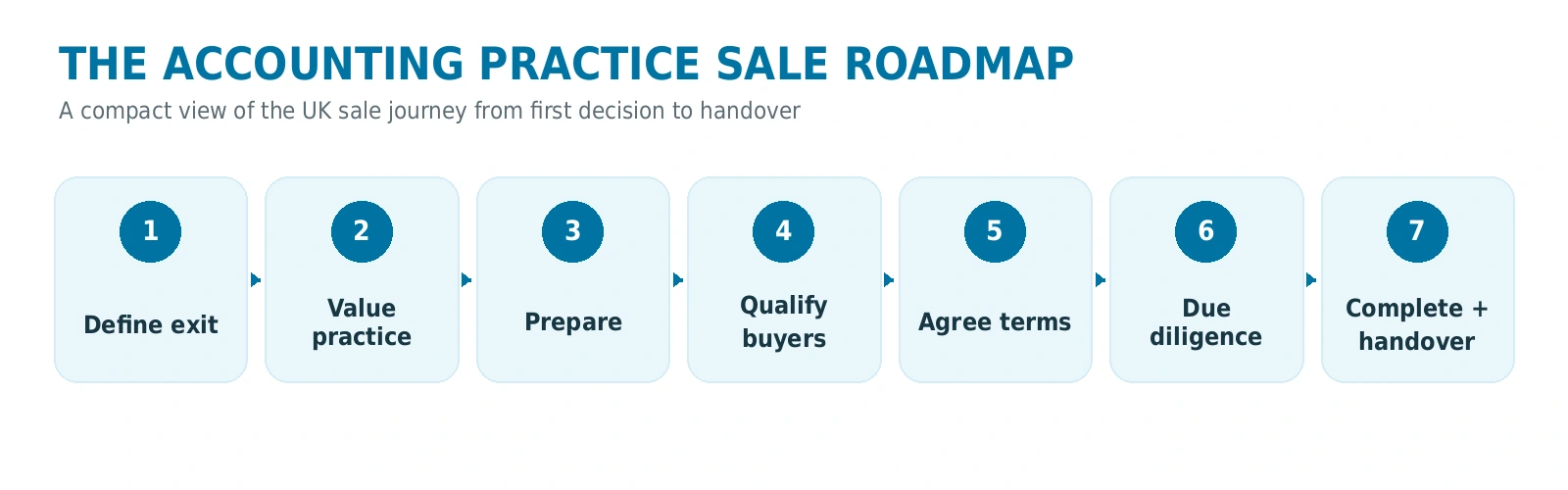
If you are asking how to sell your accounting practice in the UK, start with the outcome you want. A clean retirement, a phased exit and a partial sale can require very different buyers and terms. This guide takes you through the process from the first valuation conversation to completion and transition.
Key takeaways
- Define your exit goals before choosing a deal structure.
- Buyers look beyond turnover to recurring income, profitability, clients, team strength, systems and owner dependency.
- Prepare financial, compliance, HR and client information before serious buyer discussions begin.
- Qualify buyers for funding, culture and transition capability, not just price.
- Compare guaranteed value, payment timing and conditions as carefully as the headline offer.
- Plan the client and staff handover before completion.
1. Define the exit you actually want
Decide what success looks like before discussing valuation. Do you want to retire completely, remain for a short handover, stay for several years or retain equity? Are client continuity, staff protection or a specific working pattern after completion important to you? These choices shape the buyer list and the transaction.
A clean exit may suit a full sale, while an owner who still sees growth ahead may prefer a phased or partial transaction. Compare the options in the full sale vs partial sale guide. If timing is the bigger question, the practice exit timing guide helps you assess whether waiting has a clear commercial purpose.
2. Value the practice and get it sale-ready
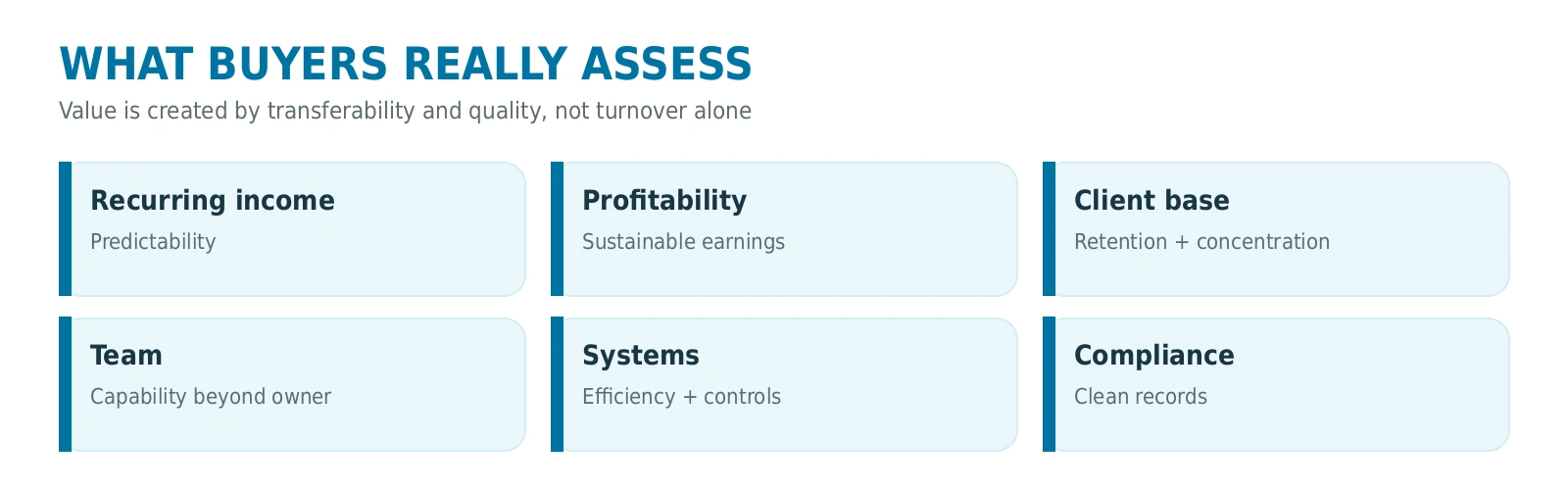
A practice is not valued on turnover alone. Buyers want to know how durable the income is and whether the firm can perform after you step back. Recurring fees, sustainable profits, client concentration, retention, fee quality, staff capability, systems and owner dependency all influence perceived risk.
Get a realistic baseline before going to market. A proper accounting practice valuation helps show both the likely value range and the issues a buyer may use to renegotiate. Then organise the underlying evidence: clean accounts, management information, recurring-fee schedules, WIP and debtors, employment information, key contracts, insurance and current compliance records.
3. Make the practice easier to transfer
A buyer is purchasing future service delivery as much as current fees. If major clients only speak to the owner, key decisions sit with one person and recurring work is undocumented, the business carries more transition risk.
Reduce that dependency where possible. Introduce clients to wider team members, document workflows, strengthen second-tier management and standardise onboarding and review processes. If you have time before sale, targeted improvements can also strengthen performance.
4. Approach buyers confidentially and qualify them properly
Confidentiality helps protect staff stability, client confidence and negotiating leverage. Sensitive information should normally be released in stages. An anonymous profile can test interest, with detailed information following only after a buyer is credible and appropriate confidentiality arrangements are in place.
Qualification should cover funding capacity, acquisition experience, service model, culture, regulatory position and expectations for your post-sale involvement. A buyer should be able to explain how the purchase will be funded and how clients and staff will be integrated.
5. Compare the whole offer, not just the price
The highest headline number is not automatically the strongest deal. Compare cash at completion, deferred payments, contingent amounts, security for future payments, the proposed handover period and any conditions that can reduce what you receive.
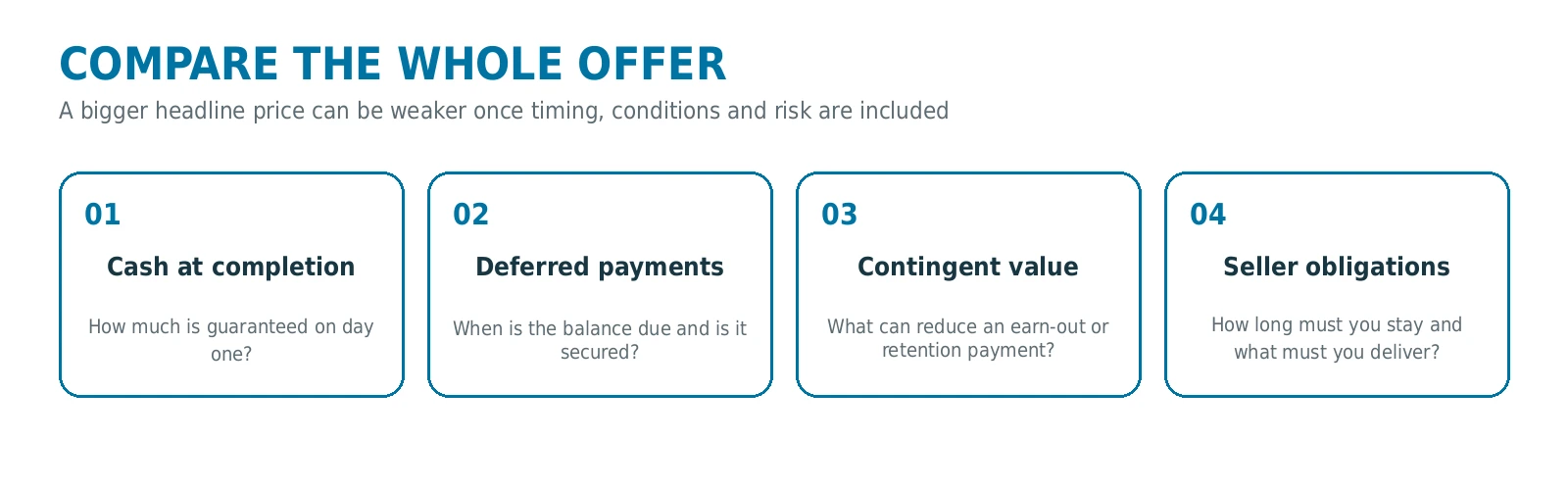
This is especially important where consideration depends on future performance or client retention. The guide to earn-outs in accounting practice sales explains why the calculation method, measurement period and buyer control after completion need careful review. Model the cash you are reasonably likely to receive, not only the number on the first page.
6. Prepare for due diligence, legal work and regulation
After heads of terms, the buyer will test the assumptions behind the offer. Expect questions about financial performance, recurring fees, client concentration and retention, employees, contracts, PII, AML, data protection, technology, complaints, debtors and WIP. Consistent information reduces delays and the risk of late price pressure.
Data sharing requires care. UK ICO guidance treats personal-data sharing during mergers and acquisitions as part of due diligence, so the parties should consider what information is shared, the lawful basis, transparency and security. Use limited or anonymised information where appropriate during early stages and take legal advice for the transaction. The legal structure may involve shares, assets, a client portfolio or another arrangement. Tax, liabilities and regulated activities can change the answer, so specialist legal and tax advice is essential.
7. Plan the client and staff handover early
A smooth transition should be designed before completion day. Agree who communicates with clients and staff, when messages are sent, how introductions happen, what the seller will do after completion and how unresolved queries will be escalated.
For clients, the central message is continuity:
- who will look after them
- what will remain familiar and what they need to do next
- For employees, clarity around leadership
- roles and timing reduces uncertainty
Your advisers should confirm the employment and data-protection steps required for the chosen structure.

Common mistakes that weaken a practice sale
Most difficult sales are not damaged by one dramatic event. Friction builds through avoidable weaknesses that reduce trust or give a buyer reasons to renegotiate.
- Setting the price from hearsay or a single revenue multiple.
- Waiting for the buyer to discover obvious documentation gaps.
- Sharing identifiable client information too early.
- Accepting a headline offer without modelling deferred or contingent payments.
- Assuming a funded buyer is automatically the right cultural or operational fit.
- Leaving regulatory, employee or client-transition planning until completion week.
How long does selling an accounting practice take?
There is no fixed UK timetable. A prepared practice with realistic pricing and credible buyers can move faster than one entering the market with unresolved issues. Buyer funding, legal structure, due diligence and the agreed handover all affect timing. Think in phases:
- valuation and preparation
- confidential buyer outreach
- offers and heads of terms
- due diligence and legal documentation
- completion and transition
If speed matters, early preparation is usually more useful than trying to compress the later stages.
Final thoughts
Selling well is largely about reducing uncertainty. Start with clear objectives and a credible valuation, improve the areas buyers care about, control how information is shared and judge every offer on its real economics. A structured process gives you more room to protect the value you have built while creating a smoother change for clients, staff and the new owner.