
Exit planning is one of the most important yet often overlooked aspects of running an accountancy practice. While many owners dedicate years to building a successful business, relatively few prepare for how they will eventually step away from it. Whether you’re planning to retire, pursue new opportunities, or simply reduce your day-to-day involvement, having a structured exit strategy can significantly influence the value of your practice and the success of the transition.
Effective exit planning accounting practice is about much more than finding a buyer. It involves improving the practice’s value, reducing operational risks, preparing staff and clients for change, and creating a roadmap that allows the business to continue thriving after your departure.
This guide explains what exit planning involves, why it matters, and the practical steps accountancy practice owners can take to prepare for a successful exit.
Key Takeaways
- Exit planning should begin several years before you intend to leave your practice.
- A well-prepared practice is often more valuable and attractive to buyers.
- Reducing owner dependency is one of the most important parts of exit planning.
- Financial performance, recurring revenue, systems, and client retention all influence buyer interest.
- A structured transition plan helps retain staff and clients after completion.
- Working with a specialist adviser can help maximise value and reduce transaction risks.
What Is Exit Planning?
Exit planning is the process of preparing your accountancy practice for a future change in ownership or leadership. Rather than making decisions only when you’re ready to sell, exit planning focuses on strengthening the business well in advance so that the transition is smoother, less disruptive, and more financially rewarding.
A comprehensive exit plan considers:
- Business value
- Financial performance
- Client relationships
- Staff retention
- Operational processes
- Succession planning
- Buyer readiness
- Personal financial objectives
Whether you intend to sell your practice in two years or ten, early planning gives you greater flexibility and more options.
Why Exit Planning Matters?
Many practice owners assume they can begin preparing once they’ve decided to sell. In reality, buyers often assess several years of financial and operational performance before making an offer. Starting early provides time to improve the areas that buyers value most.
Benefits of exit planning include:
- Maximising practice value
- Attracting a wider range of qualified buyers
- Reducing business risks
- Improving operational efficiency
- Increasing client confidence
- Supporting staff retention
- Creating a smoother transaction process
Instead of reacting to circumstances, owners who plan ahead remain in control of both the timing and structure of their exit.
When Should You Start Exit Planning?
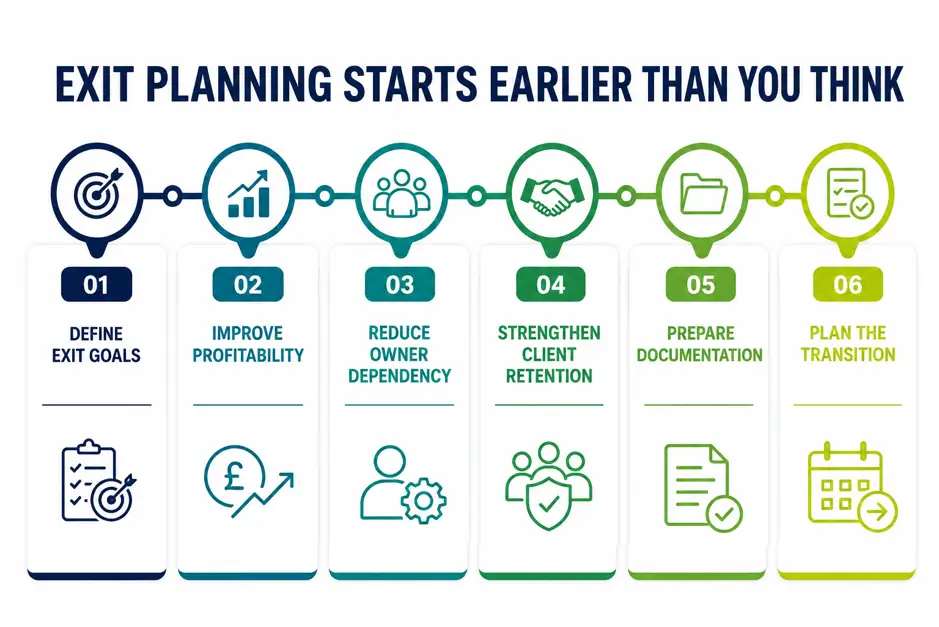
One of the biggest misconceptions is that exit planning only begins when retirement is approaching. In reality, many advisers recommend starting the process three to five years before your intended exit. This gives you enough time to improve profitability, diversify your client portfolio, reduce owner dependency, strengthen internal processes, build a capable management team, and resolve any operational issues that could affect the attractiveness of your practice. Even if your plans change or you decide not to sell immediately, these improvements will enhance the overall performance, resilience, and long-term value of your practice.
Define Your Exit Objectives
Every practice owner has different reasons for exiting. Before making strategic decisions, define what success looks like for you.
Questions to consider include:
- When do you want to leave?
- Are you seeking retirement or another business opportunity?
- Do you want a complete exit or a phased transition?
- What financial outcome are you hoping to achieve?
- Do you want to protect your staff?
- How important is maintaining your firm’s reputation?
Your answers will influence the type of buyer you pursue and the structure of the eventual transaction.
Understand What Buyers Want
Successful exit planning requires thinking like a buyer. Most buyers look beyond annual revenue and focus on the long-term sustainability of the practice.
They commonly assess:
-
Recurring Revenue
Stable recurring income provides predictable cash flow and reduces investment risk. It also gives buyers greater confidence in the practice’s ability to generate consistent revenue after the ownership transition.
-
Client Retention
Long-standing client relationships demonstrate business stability. They also reassure buyers that the practice is more likely to retain its revenue and client base following a change in ownership.
-
Client Diversification
Practices with revenue spread across multiple clients are generally considered less risky than those dependent on a handful of major accounts.
-
Profitability
Healthy margins suggest efficient operations and strong financial management. Consistent profitability also gives buyers confidence that the practice can continue generating sustainable returns after the acquisition.
-
Experienced Team
A capable team that can operate independently reduces disruption after completion. It also reassures buyers that client relationships and day-to-day operations can continue smoothly without relying heavily on the current owner.
-
Operational Systems
Documented processes, cloud accounting software, and efficient workflows improve transferability. Understanding these priorities allows owners to prepare their practice accordingly.
Reduce Owner Dependency
One of the most common challenges during a practice sale is excessive reliance on the owner. If clients associate the business solely with you, buyers may worry about client retention after completion.
To reduce owner dependency:
- Delegate client relationships.
- Empower senior team members.
- Document internal procedures.
- Standardise workflows.
- Introduce management responsibilities across the team.
The more independently your practice operates, the more attractive it becomes to potential buyers.
Strengthen Financial Performance
Strong financial performance remains one of the biggest drivers of business value. During your exit planning period, focus on improving key financial indicators such as:
- Recurring fee income
- Profit margins
- Cash flow
- Revenue consistency
- Cost efficiency
Avoid making short-term decisions that increase profits at the expense of client service or long-term sustainability.
Buyers typically value businesses with consistent financial performance over several years rather than one exceptional year.
Review Your Client Portfolio
Not every client contributes equally to the value of your practice. During exit planning, review your portfolio carefully.
Consider:
- Client profitability
- Industry sectors
- Client retention rates
- Concentration risk
- Service mix
Reducing dependence on a small number of high-value clients can improve the perceived stability of the practice. Similarly, opportunities to increase recurring advisory services may strengthen future income streams.
Invest in Systems and Technology
Modern accounting practices increasingly rely on cloud-based software and digital workflows. Practices that use integrated technology often appeal more to buyers because they are easier to manage and scale.
Areas to review include:
- Practice management software
- CRM systems
- Cloud accounting platforms
- Document management
- Cybersecurity
- Automation tools
Well-documented systems also reduce reliance on individual employees and simplify knowledge transfer.
Prepare Your Team for Transition
Your employees play a vital role in maintaining continuity during and after a sale. Buyers often view an experienced, stable team as one of the practice’s greatest assets.
As part of your exit planning, consider:
- Identifying future leaders within the practice
- Delegating responsibilities across the management team
- Providing training where necessary
- Creating documented job roles
- Encouraging knowledge sharing
While the timing of staff communication will depend on the transaction, having a capable and engaged team can significantly increase buyer confidence.
Organise Your Documentation
Buyers expect well-organised information during the due diligence process. Preparing documentation in advance can reduce delays and demonstrate that the practice is professionally managed.
Documents commonly requested include:
- Financial statements
- Management accounts
- Client fee schedules
- Employee contracts
- Supplier agreements
- Professional indemnity insurance
- Regulatory compliance records
- Practice policies and procedures
- Software licences
- Lease agreements (where applicable)
Having these documents readily available helps streamline the transaction and supports a smoother due diligence process.
Consider Your Exit Options
Selling to a third-party buyer is only one potential exit route. The right option depends on your personal goals, financial objectives, and the future you want for your practice.
| Exit Option | Suitable For |
| Trade Sale | Owners seeking a complete exit and maximum market exposure |
| Merger | Firms looking for shared growth and long-term collaboration |
| Internal Management Buyout | Existing partners or senior staff taking ownership |
| Family Succession | Practices with a family member ready to continue the business |
| Phased Exit | Owners who wish to reduce involvement gradually before leaving completely |
Each option has different financial, operational, and personal considerations. Understanding these early allows you to prepare accordingly.
Develop a Transition Plan
A successful exit doesn’t end when contracts are signed. Buyers often place significant importance on how clients, staff, and operational knowledge will be transferred after completion.
An effective transition plan should include:
-
Client Communication
Develop a clear communication strategy that reassures clients about continuity of service and introduces the new ownership professionally.
-
Staff Handover
Ensure employees understand their roles during the transition and have the support they need to adapt.
-
Operational Knowledge
Document key processes, supplier relationships, and internal procedures to minimise disruption after completion.
-
Seller Support
Many transactions include an agreed handover period during which the seller remains available to support introductions, answer questions, and assist with client retention. Planning these activities in advance helps protect the long-term value of the practice.
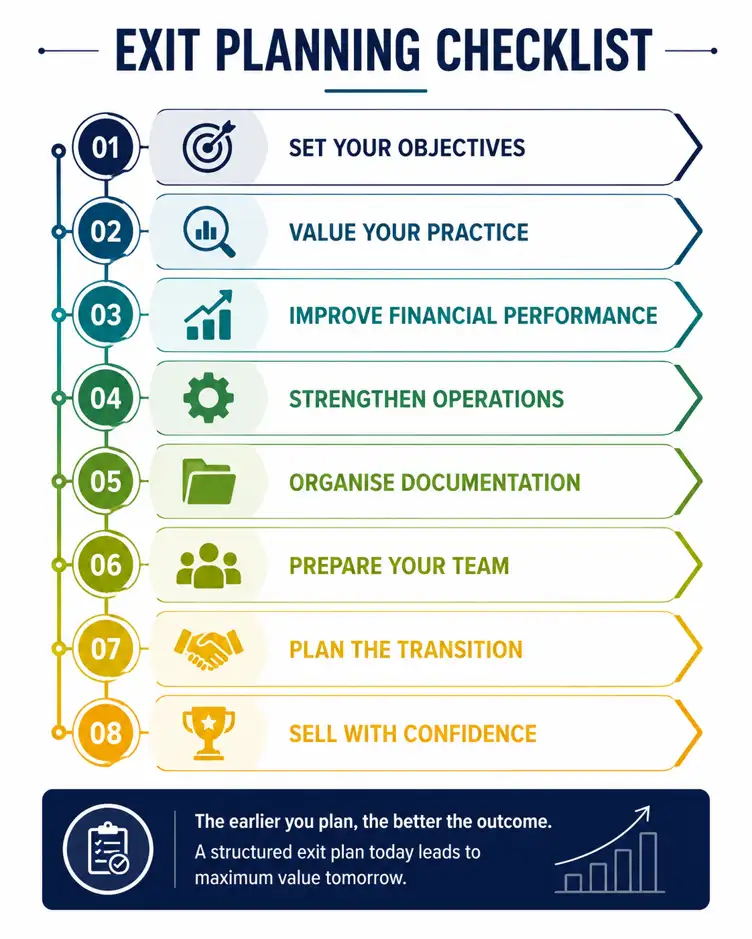
Exit Planning Checklist
Use this checklist to assess whether your practice is progressing towards a successful exit.
How Sell Practice Can Help?
Planning your exit is a long-term process that benefits from specialist advice. At Sell Practice, we work with accountancy practice owners long before their business goes to market. Our team provides guidance throughout the planning process, helping owners understand their practice’s value, strengthen buyer appeal, and prepare for a successful transition.
Our services include:
- Confidential exit planning discussions
- Practice valuation guidance
- Buyer readiness assessments
- Strategic advice to maximise value
- Buyer introductions
- Transaction support
- Transition planning
Whether you’re planning to sell in the near future or several years from now, early planning can help you achieve a stronger outcome.
Conclusion
Successful exit planning accounting practice is about far more than deciding when to sell. It involves preparing your business, strengthening its value, reducing operational risks, and ensuring a smooth transition for clients, staff, and future owners. The earlier you begin planning, the greater your ability to improve the factors that buyers value most. Even if your exit is several years away, taking proactive steps today can increase your options and help maximise the value of your practice. If you’re considering your long-term future, Sell Practice can provide confidential guidance and expert support to help you prepare for a successful exit.