
For many accountancy practice owners, selling their firm represents the culmination of years or even decades of hard work. Yet one concern consistently outweighs almost every other aspect of the sale process:
How do you sell an accountancy practice without compromising client confidentiality?
Unlike many businesses, accountancy firms handle highly sensitive information. Client financial records, tax affairs, payroll data, business performance figures, and personal information form the foundation of trusted professional relationships. Maintaining confidentiality is not only essential for preserving client trust but also a professional and legal obligation.
The challenge is that prospective buyers require information to assess the value and viability of a practice. They need to understand the client base, revenue streams, profitability, and growth potential before making an offer. This creates a delicate balancing act between protecting confidential information and providing enough detail for buyers to make informed decisions.
Fortunately, experienced practice sellers follow established processes that allow them to market and sell their practices while safeguarding client confidentiality throughout the transaction.
This guide explains how confidentiality is managed during accountancy practice sales, the risks involved, best practices for UK accountants, and practical steps to ensure a secure and successful sale.
KEY TAKEAWAYS
- Client confidentiality is a critical consideration during any accountancy practice sale.
- Confidential information should only be disclosed in stages throughout the sales process.
- Non-Disclosure Agreements (NDAs) help protect sensitive information.
- Buyers do not need client identities during the early stages of negotiations.
- Properly managed sales processes protect client trust and practice value.
- UK GDPR and professional obligations must be considered throughout the transaction.
- Early planning reduces confidentiality risks and supports smoother practice transitions.
- Specialist brokers and advisors can help maintain confidentiality while attracting suitable buyers.
Why Confidentiality Matters So Much in Practice Sales
Confidentiality is one of the most valuable assets within an accountancy practice.
Clients trust their accountant with:
- Financial statements
- Tax records
- Payroll information
- Business performance data
- Personal financial affairs
- Commercially sensitive information
A perceived breach of confidentiality can damage client relationships, create reputational risks, and potentially impact the value of the practice being sold.
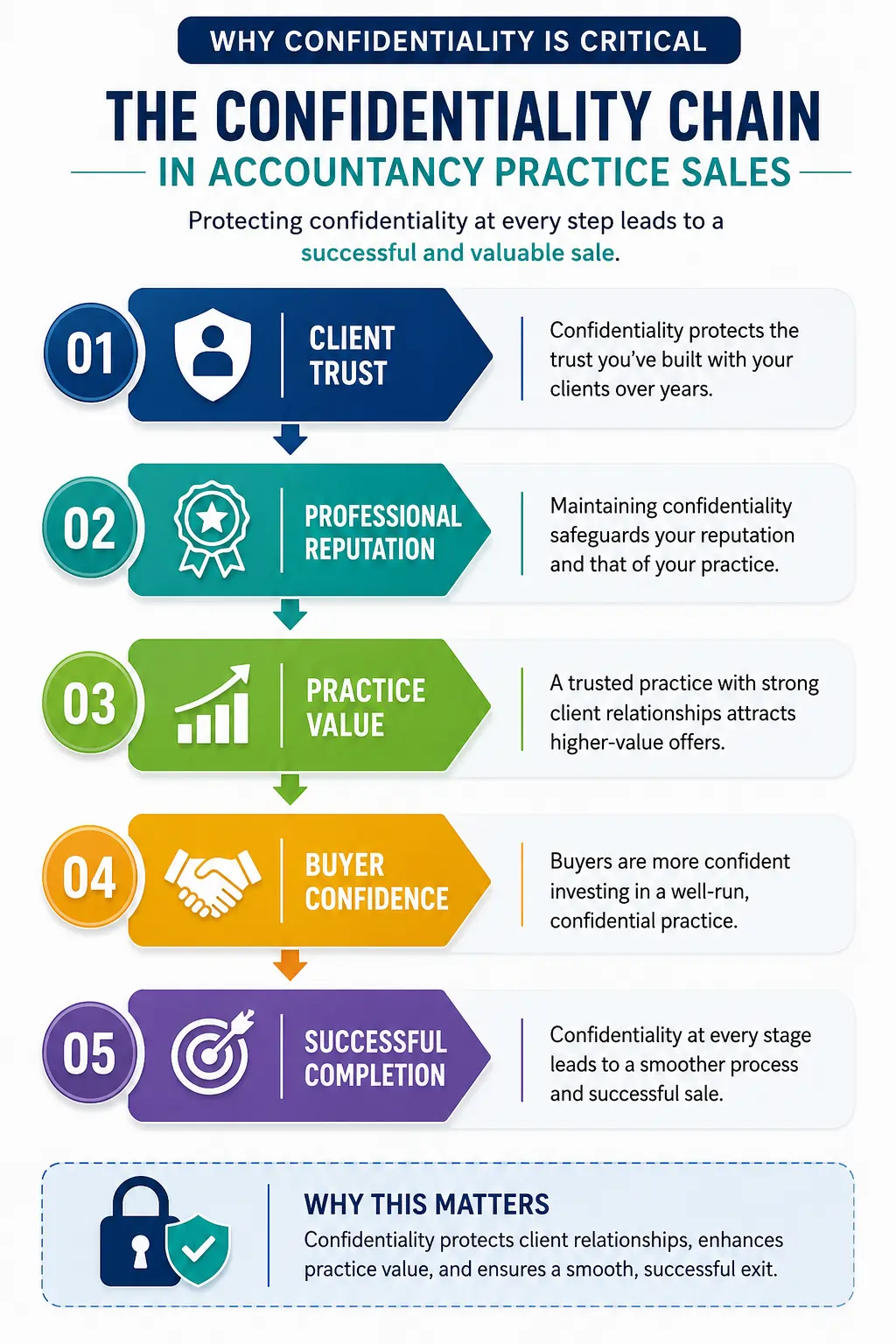
WHY THIS MATTERS
Even rumours that a practice is being sold can create uncertainty among clients and staff. A structured confidentiality process helps maintain stability throughout the transaction.The Problem: Buyers Need Information. The Solution: Controlled Disclosure
One of the biggest misconceptions among practice owners is that buyers immediately receive full access to client information.
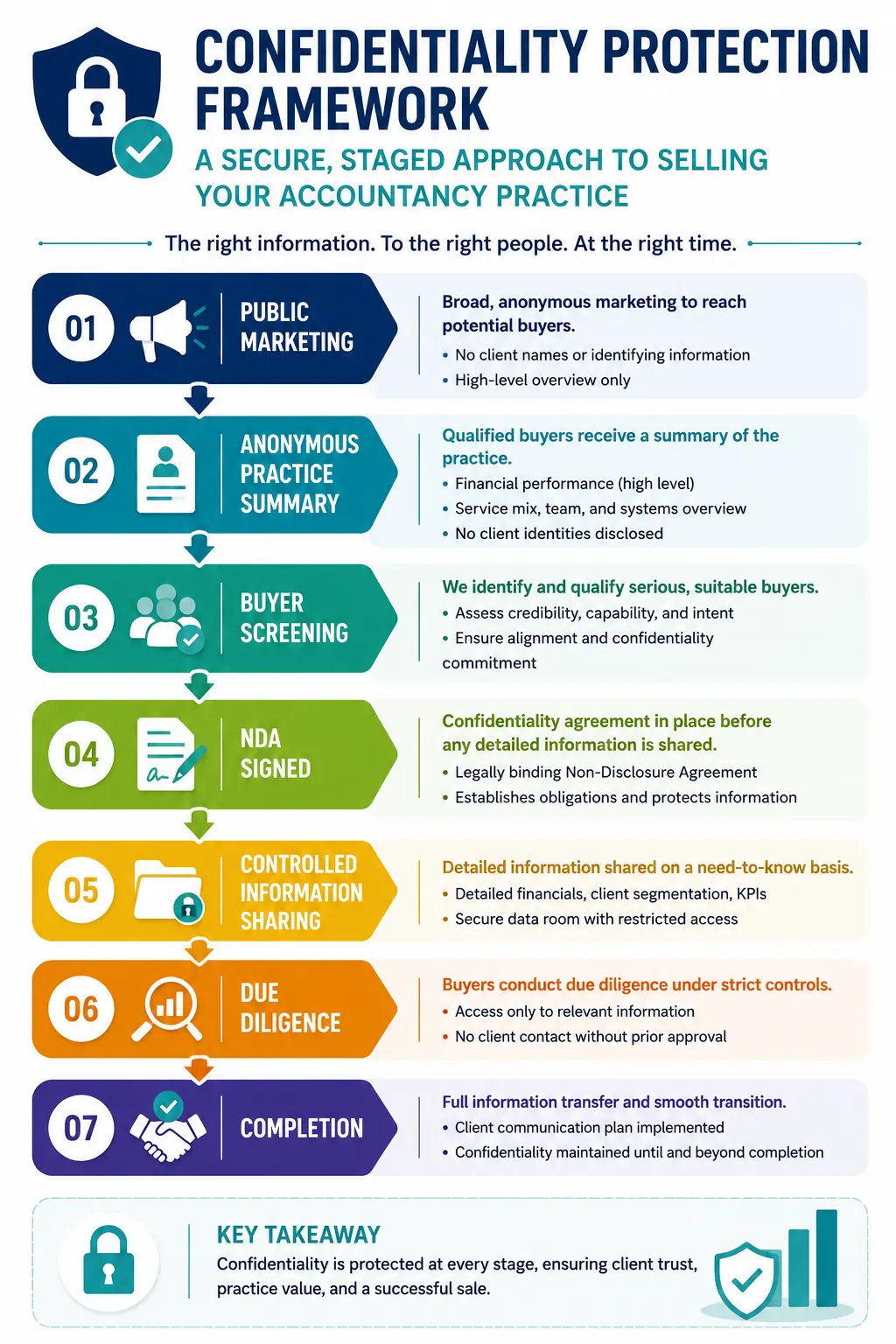
In reality, information is typically disclosed in stages.
| Stage | Information Shared |
| Initial Marketing | Practice overview, fee levels, location, service mix |
| NDA Signed | More detailed financial information |
| Heads of Terms | Client segmentation and operational data |
| Due Diligence | Selected client information where appropriate |
| Completion | Full transfer under agreed arrangements |
This staged approach protects confidentiality while allowing buyers to evaluate the opportunity.
What Information Can Be Shared Before an NDA?
At the initial marketing stage, information should remain anonymous.
Buyers typically receive:
- Practice location (general region)
- Annual fee income
- Service mix
- Staffing overview
- Profitability indicators
- Growth opportunities
Client names, specific businesses, and identifying information should not be disclosed.
Understanding Non-Disclosure Agreements (NDAs)
A Non-Disclosure Agreement is one of the most important tools used during practice sales.
NDAs help:
- Protect client information
- Prevent misuse of confidential data
- Restrict information sharing
- Establish legal obligations
- Reduce commercial risk
Before detailed information is disclosed, prospective buyers should normally sign an NDA.
| Protected Information |
| Client information |
| Financial performance |
| Employee details |
| Pricing structures |
| Business processes |
| Growth plans |
| Proprietary systems |
WHY THIS MATTERS
While NDAs cannot eliminate all risks, they create legal accountability and provide additional protection for sellers.
UK GDPR and Professional Responsibilities
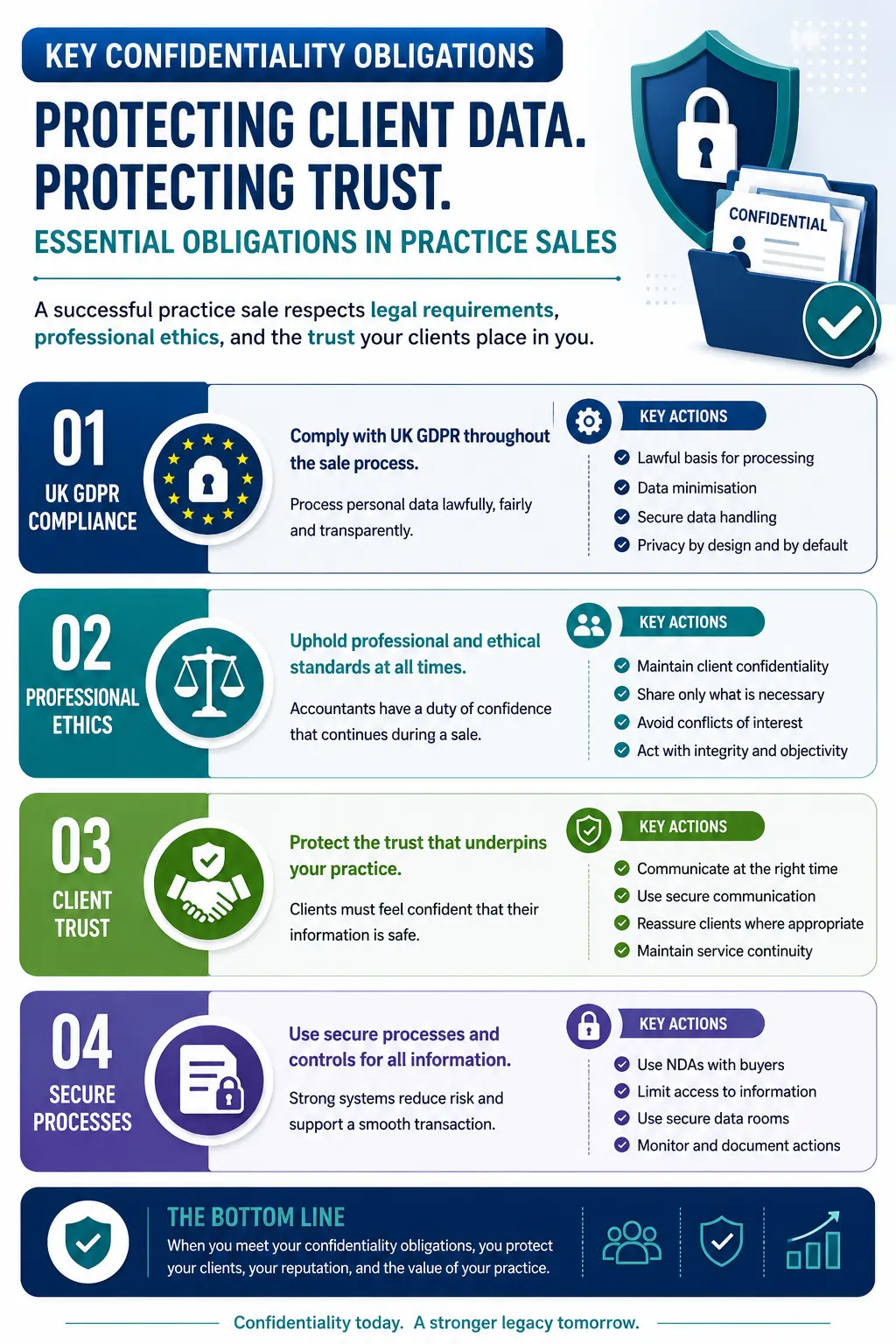
Accountants must also consider data protection obligations.
The UK GDPR requires organisations to process personal data lawfully, fairly, and securely.
When selling an accountancy practice, sellers should consider:
- Data minimisation
- Lawful basis for processing
- Secure information sharing
- Access controls
- Data transfer procedures
Professional obligations from accountancy bodies may also apply.
Common Confidentiality Mistakes Sellers Make
Many confidentiality risks arise from avoidable mistakes.
| Mistake | Potential Consequence |
| Revealing client names too early | Client concerns |
| Poor buyer screening | Information misuse |
| No NDA in place | Increased risk |
| Informing staff too early | Internal uncertainty |
| Using unsecured documents | Data breaches |
| Sharing excessive information | Reduced confidentiality |
Client Loss Fears? Communicate Clearly.
Many practice owners worry that clients will leave if they discover the practice is being sold.
However, experienced sellers understand that communication timing is critical.
Typically:
Before Heads of Terms
- Client confidentiality maintained
- No client notifications
During Due Diligence
- Limited information shared
- Strict confidentiality controls
Before Completion
- Communication plans prepared
After Completion
- Joint client communication often implemented
A planned approach minimises disruption and supports client retention.

Case Study: Protecting Confidentiality During a Practice Sale
A UK accountancy practice generating £850,000 in recurring fees planned a retirement exit.
The owner’s primary concern was client confidentiality.
Working with specialist advisors, they:
- Created an anonymous practice profile
- Screened potential buyers
- Required NDAs before disclosures
- Shared information in stages
- Controlled due diligence access
The outcome:
- Multiple buyer enquiries
- No client departures
- Smooth transaction process
- Successful completion
The key was not withholding information.
It was managing information correctly.
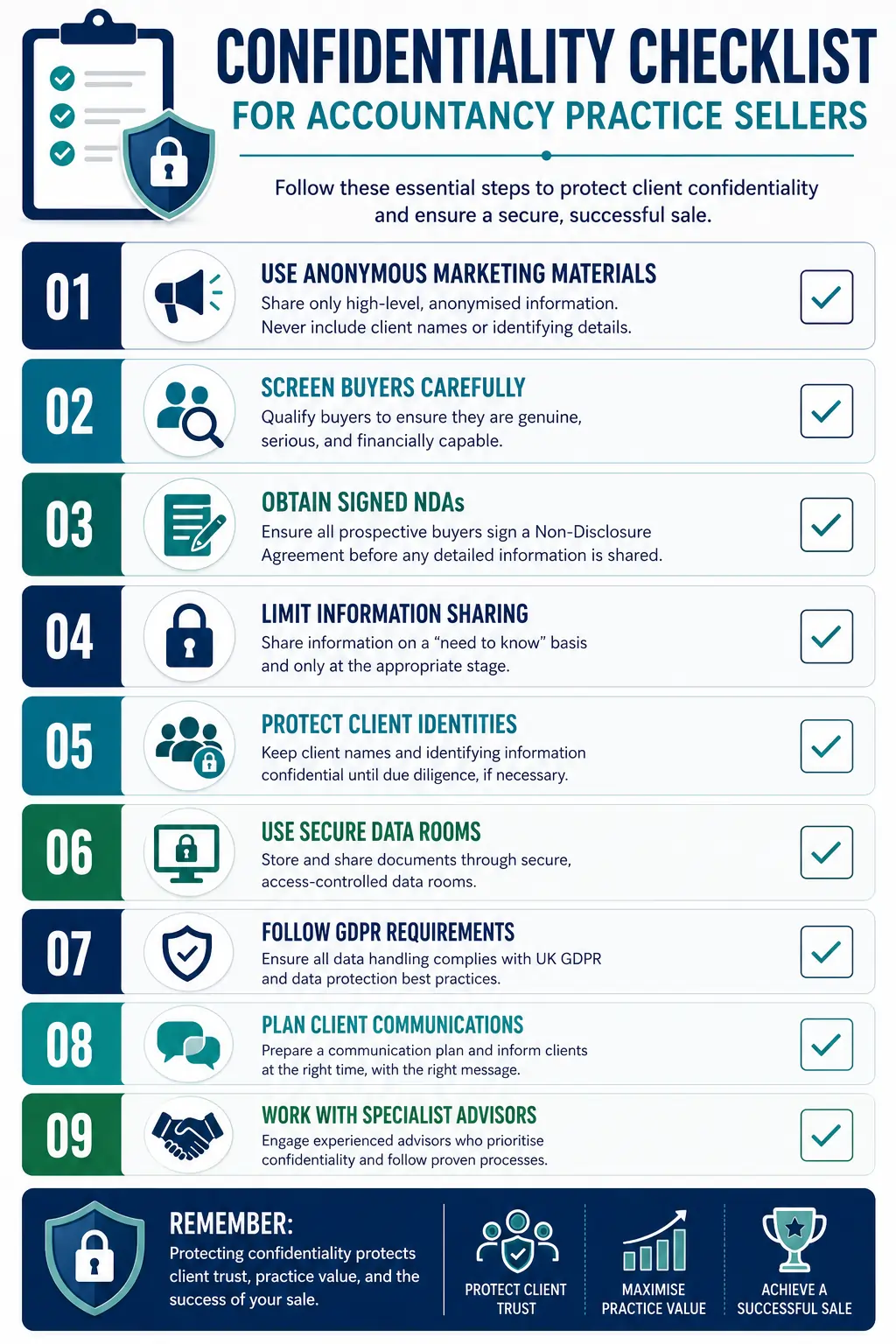
Confidential Practice Sale Checklist
How Specialist Advisors Help Protect Confidentiality
Professional advisors can:
- Qualify buyers
- Manage NDAs
- Control information flow
- Coordinate due diligence
- Protect client identities
- Support communication planning
This reduces risks while improving buyer confidence.
| Area | Independent Sale | Specialist Support |
| Buyer Screening | Limited | Structured |
| Confidentiality Controls | Variable | Strong |
| NDA Management | Seller Managed | Professionally Managed |
| Due Diligence | More Difficult | Streamlined |
| Client Protection | Higher Risk | Lower Risk |
Practical Framework: The Confidential Sale Process
Before disclosing any information, ask:
- Does the buyer need this information now?
- Is it anonymised?
- Has an NDA been signed?
- Is disclosure proportionate?
- Does it comply with GDPR?
- Does it protect client interests?
If the answer is yes, disclosure may be appropriate.
Conclusion
Client confidentiality should never be compromised when selling an accountancy practice.
The good news is that successful practice sales happen every day while maintaining high levels of confidentiality and professionalism.
By following a structured process, using NDAs, sharing information in stages, complying with UK GDPR requirements, and working with experienced advisors, accountancy practice owners can protect client trust while achieving a successful sale.
At SellPractice, we help UK accountants navigate the practice sale process confidentially and professionally, ensuring buyers receive the information they need while protecting the relationships and reputation you’ve worked hard to build.