
After years of building a profitable accountancy practice, the decision to sell is one of the most consequential you will ever make. This guide ensures you get the outcome and the price you deserve.
Most accountants spend decades honing their craft, building client relationships, and growing a practice that generates consistent recurring revenue. Yet when the time comes to sell, many owners are unprepared, leaving significant money on the table, or worse, watching a poorly structured transaction unravel at the eleventh hour.
The problem is that running a practice and selling a practice are entirely different skills. Selling requires understanding valuation methodologies, preparing documentation, identifying the right buyers, managing confidentiality, negotiating deal structures, and navigating complex tax implications, often all at once, without disrupting the day-to-day operation of the business.
This guide walks you through every stage of a successful accountancy practice sale from initial preparation through to completion with practical frameworks, real-world examples, common mistakes to avoid, and actionable checklists you can apply immediately.
Key Takeaways
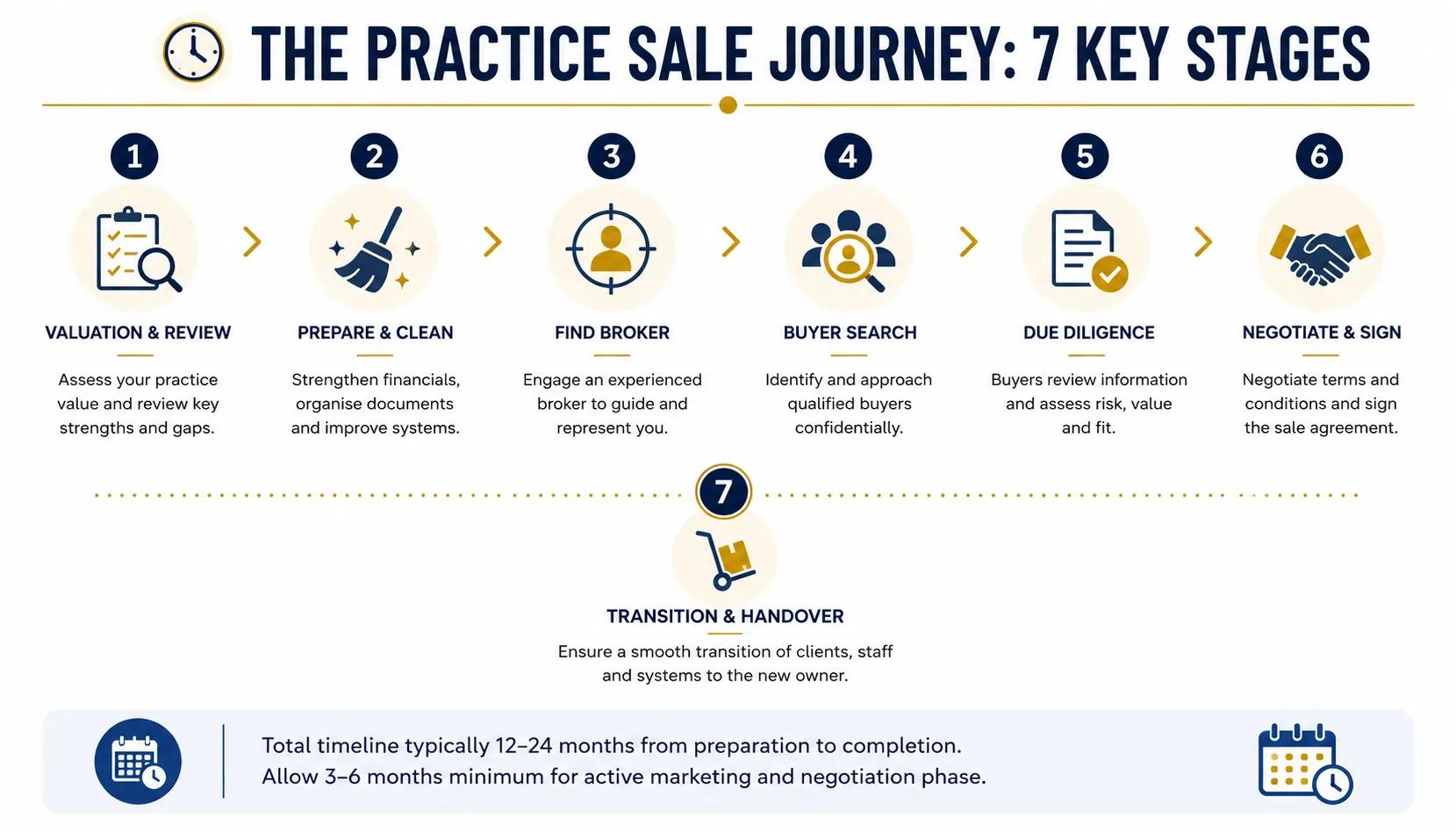
- Preparation typically takes 12–24 months; sellers who rush earn significantly less.
- Accountancy practices are valued primarily on recurring fee income quality matters more than quantity.
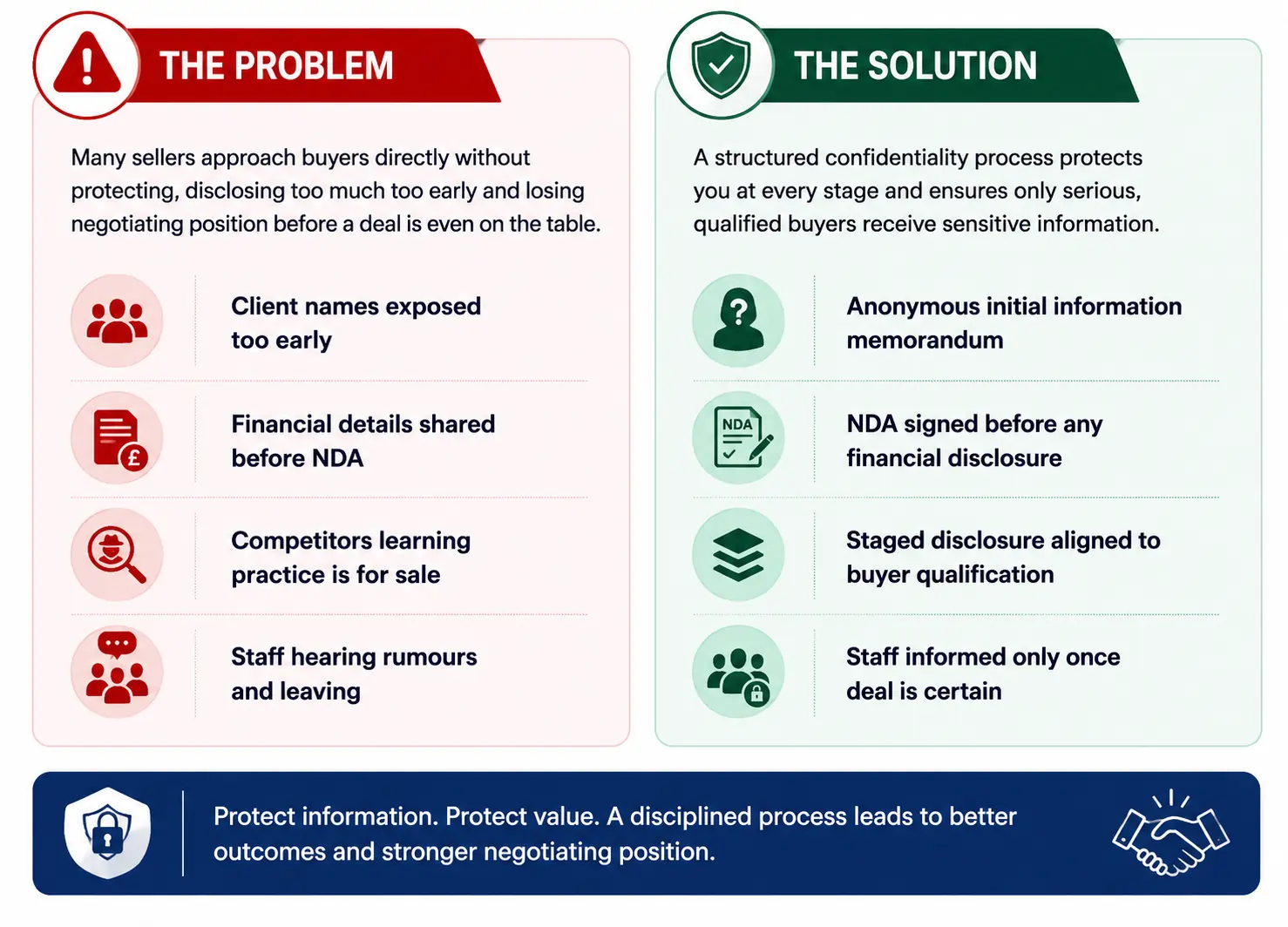
- Confidentiality must be managed carefully throughout; a leak can destabilise your client base and staff.
- The right buyer is not always the highest bidder cultural and operational fit determines post-sale retention rates.
- Earnout clauses and client retention guarantees are standard; understanding them protects your payout.
- Tax planning before a sale can dramatically improve your net proceeds.
- Post-sale transition planning is as important as the deal itself most failures happen here.
Why Selling an Accountancy Practice Is Harder Than It Looks
Many practice owners assume that because their business is profitable and well-run, it will attract strong interest and sell quickly at a favourable multiple. In reality, the accountancy M&A market is more nuanced. Buyers are sophisticated and increasingly selective, conducting detailed due diligence on fee quality, client demographics, staff dependency, and risk concentration.
Accountancy Practices Have Unique Valuation Dynamics
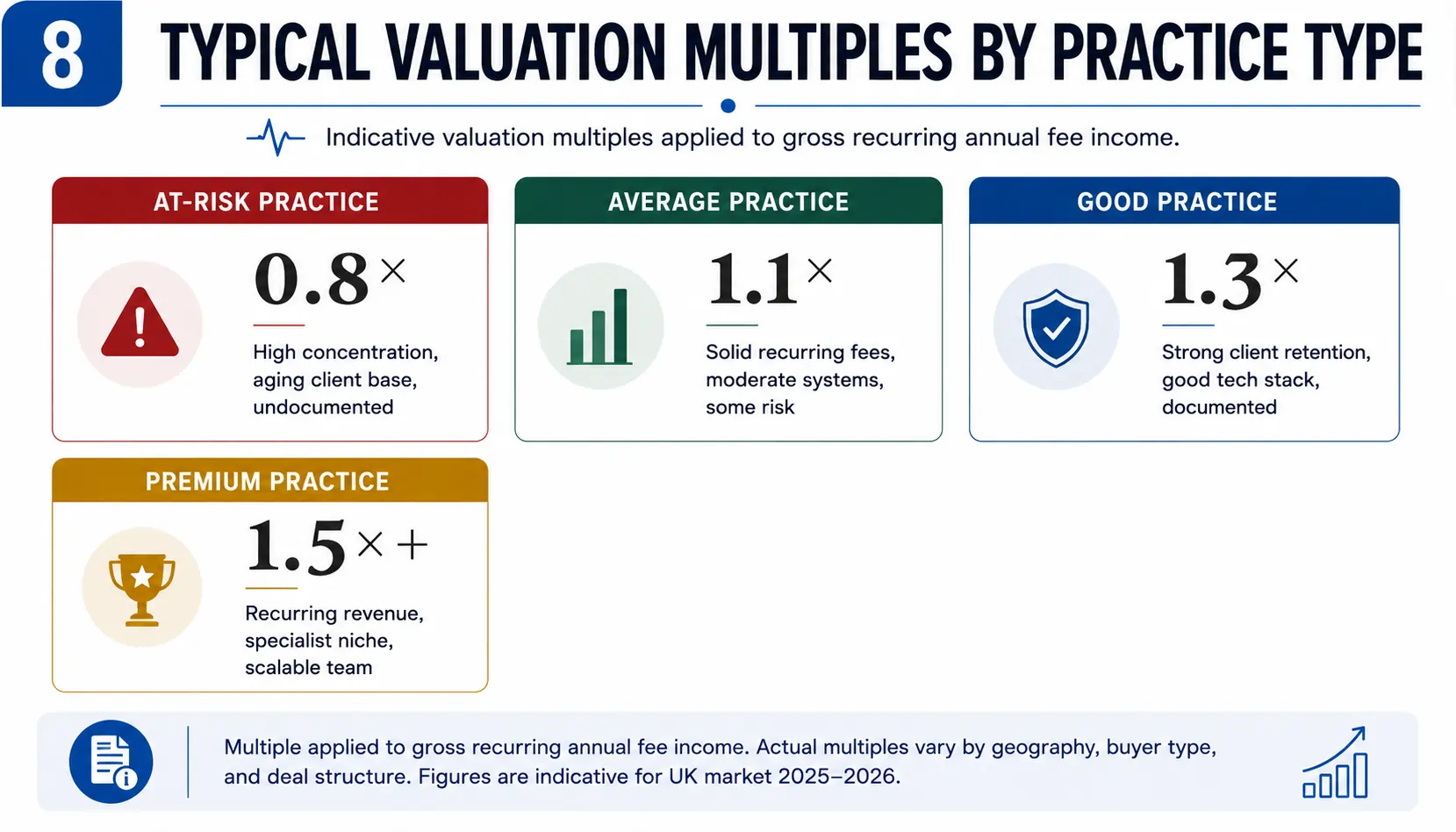
Unlike most businesses, accountancy practices are valued primarily on recurring fee income rather than EBITDA. Buyers pay for predictability. A practice generating £400,000 in recurring annual fees from a diversified, multi-year client base will command a significantly higher multiple than one generating the same revenue from a handful of large, at-risk clients.
- Fee recurrence and predictability
- Client age demographics and churn risk
- Concentration risk (no single client exceeding 10–15% of revenue)
- Average fee per client and service mix
- Technology platform and workflow maturity
- Staff structure and key-person dependency
The Market Is Highly Active But Competitive
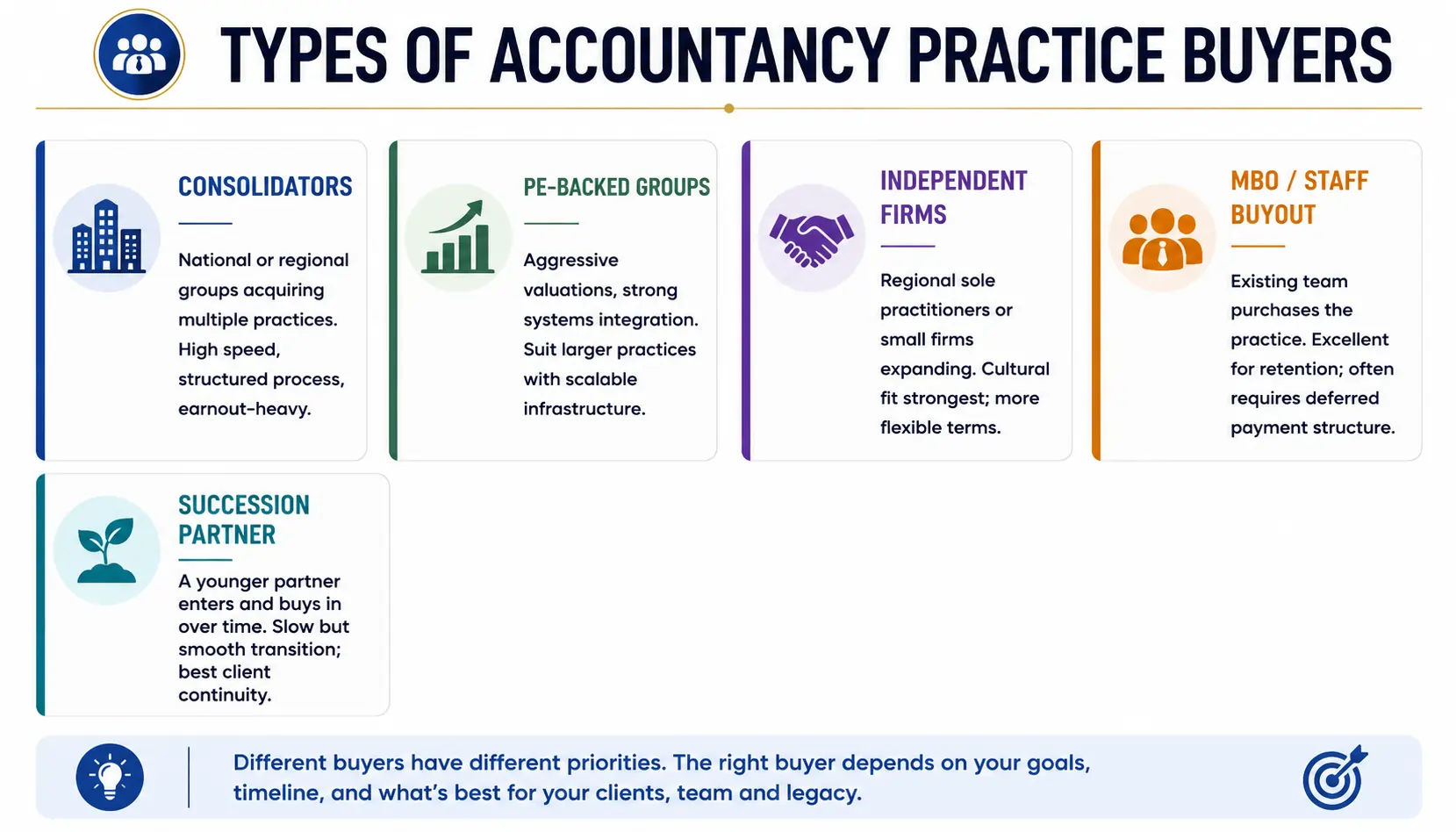
Demand for accountancy practices remains strong from consolidators, private equity-backed groups, sole practitioners looking to grow, and retiring partners seeking bolt-on acquisitions. However, increased competition means buyers can be selective, and practices with weaknesses whether in fee quality, client concentration, or documentation will either sell at a discount or struggle to close.
Step 1: Understand What Your Practice Is Really Worth
Before approaching any buyer or broker, you need a clear, honest assessment of your practice’s value. Overestimating leads to failed negotiations; underestimating means leaving money behind. The starting point is always a thorough internal review.
Analyse Your Fee Income in Detail
Break your recurring fee base into categories that buyers will scrutinise. This is not simply a revenue figure — it is an analysis of durability, risk, and growth potential.
- Separate recurring fees from one-off and project fees
- Identify clients on formal standing orders or direct debits
- Calculate average client tenure and retention rate
- Segment fees by service type (compliance, advisory, payroll, bookkeeping)
- Flag any clients at risk of leaving, reducing spend, or with external ties to you personally
- Review outstanding WIP and debt age carefully
Assess Key-Person Dependency
One of the most common reasons deals fall apart or values erode is excessive key-person dependency. If clients only want to deal with you, and you are leaving, buyers will price in significant churn risk.
- Introduce clients to other team members before going to market
- Ensure client relationships are documented and transferred at team level
- Reduce personal mobile and direct email dependency over time
- Build a team that can service clients without founder involvement
Step 2: Prepare Your Practice Before Going to Market
The best time to prepare for a sale is two to three years before you intend to sell. The actions you take during this preparation phase have the greatest impact on both sale price and deal certainty. Rushing this stage is the single most common mistake practice owners make.
Strengthen Your Financial Records
Buyers and their advisors will conduct detailed financial due diligence. Clean, well-organised records signal a well-run practice and reduce the risk of buyers repricing downwards during negotiation.
- Ensure three years of profit and loss accounts are clearly presented
- Reconcile all WIP, debtors, and fee income accurately
- Separate personal drawings and business expenses clearly
- Identify and explain any one-off costs or exceptional items
- Show adjusted EBITDA clearly where appropriate
Modernise Your Technology Stack
Cloud-based practices command a premium because they are easier to integrate post-acquisition. If you are still running desktop-only software with manual workflows, upgrading before sale will meaningfully improve both your valuation and your pool of interested buyers.
- Migrate to cloud accounting software (Xero, QuickBooks, Sage)
- Implement client portal and digital document management
- Automate reminders and compliance tracking where possible
- Document all workflows and systems so they can be transferred
Tidy Up Contractual and Legal Matters
- Ensure all clients have signed engagement letters
- Review and renew expired agreements
- Resolve any outstanding complaints or regulatory matters
- Confirm all GDPR and data protection compliance is in order
- Check that staff contracts, leases, and supplier agreements are transferable
Step 3: Finding the Right Buyer
Not every buyer is the right buyer. A higher headline price from the wrong buyer can result in client mass-departure, staff resignations, and deferred payments that never arrive due to retention shortfalls. Understanding the buyer landscape is critical to making a decision you will not regret.
Use a Specialist Broker
A specialist accountancy practice broker will give you access to a qualified buyer pool, manage confidentiality, handle initial enquiries, and support you through the negotiation process. Their fee is almost always recovered through better pricing and deal structure.
- Look for brokers with a specific accountancy practice focus
- Check their recent transaction history and references
- Understand fee structure typically 5–10% of deal value
- Ensure they manage confidentiality rigorously throughout
Step 4: Managing Due Diligence
Due diligence is where many deals slow down, reprice, or fail entirely. Buyers will scrutinise your practice in detail, and anything they discover that was not disclosed upfront creates distrust and gives them grounds to renegotiate. Transparency, preparation, and organisation are your best defences.
What Buyers Will Examine
- Full client fee schedule with tenure and service history
- Three years of management accounts and profit and loss
- Staff contracts, salaries, and holiday liability
- All professional indemnity claims history
- Outstanding WIP, aged debtors, and billing cycles
- Regulatory compliance and professional body memberships
- Software subscriptions, leases, and third-party contracts
- Any client complaints or HMRC-related matters
Prepare a Data Room in Advance
Organising all due diligence materials in a secure, structured virtual data room before going to market dramatically speeds up the process and signals to buyers that your practice is professionally run. It also prevents the common scenario where a seller scrambles to find documents under time pressure, creating doubt about operational quality.
Step 5: Understanding Deal Structure and Negotiating Effectively
The headline price is only one element of a deal. The structure of the consideration how much you receive, when, and on what conditions can be equally important. Many sellers focus on price while underestimating the impact of earnout terms, retention clauses, and post-sale obligations.
Common Deal Structures in Accountancy Practice Sales
- Upfront cash payment lowest risk; buyers typically discount for certainty
- Earnout over 1–3 years higher total value but contingent on client retention
- Staged payments structured over time; common for internal buyouts
- Equity rollover seller retains a stake in the acquiring business
- Combination structures upfront cash plus deferred consideration based on milestones
Negotiating Client Retention Clauses
Most buyers will include a retention mechanism meaning your deferred payments are reduced if clients leave within a defined period after completion. Understanding and negotiating these terms carefully protects your payout.
- Push for a measurement period no shorter than 12 months
- Agree clear definitions of what constitutes a “retained” client
- Ensure you have some influence over transition quality during the retention period
- Negotiate exclusions for clients who leave for reasons outside your control
- Get independent legal advice on all deferred consideration terms
Case Study South East General Practice, £620k Recurring Fees
A two-partner practice with 18 years of trading history began a structured 18-month preparation process. They migrated to cloud software, introduced a second director to reduce key-person risk, resolved two outstanding engagement letter gaps, and reorganised their fee schedule to clearly differentiate recurring from project income.
After engaging a specialist broker, they received four qualified offers. Despite the highest offer being from a national consolidator at 1.45× gross fees, they selected a regional independent firm at 1.3× due to stronger cultural alignment and more favourable retention clause terms. The transition was smooth, client retention exceeded 94% in year one, and the full consideration was received.

Practice Sale Preparation Checklist: Use This Before Going to Market
Financial Preparation
-
Three years of profit and loss accounts prepared and reconciled
- Recurring vs. one-off fee income clearly separated and documented
- WIP and aged debtor report cleaned and reconciled
- Personal drawings and non-business expenses separated
- Adjusted EBITDA calculated and explained
Client & Operational Readiness
- All clients have signed, current engagement letters
- Client relationships introduced to other team members
- Top 20 clients identified, risk assessed, and briefed to key staff
- Technology stack assessed and upgraded if necessary
- All workflows documented and not solely owner-dependent
Legal & Compliance
- Professional indemnity claims history reviewed and documented
- GDPR and data protection compliance confirmed
- Staff contracts, leases, and supplier agreements checked for transferability
- Any regulatory or HMRC matters resolved or disclosed
Tax & Advisory
- Independent accountant engaged to advise on sale proceeds tax
- Business Asset Disposal Relief eligibility confirmed
- Share vs. asset sale implications reviewed
- Post-sale financial planning considered (pensions, investments)
Common Mistakes That Destroy Practice Sale Value
- Going to Market Too Early
Without 12–18 months of preparation, practices present poorly, attract lower offers, and face higher due diligence risk. Preparation is not optional it is the primary driver of value. - Focusing Only on Headline Price
A higher headline price with aggressive retention clauses may pay out less than a slightly lower offer with more seller-friendly terms. Always model the total expected consideration under different retention scenarios. - Failing to Manage Confidentiality
A leak that staff or clients discover the practice is for sale can trigger departures before completion, directly damaging your valuation. Confidentiality management is a critical operational task throughout the sale process. - Neglecting Post-Sale Transition Planning
Poor transition plans result in client churn, which reduces deferred payments. A detailed, agreed transition plan covering communications, introductions, and service continuity protects both parties and is central to a successful sale. - Using a Generalist Advisor
Accountancy practices are a specialist asset class. Using a generalist business broker who does not understand fee multiples, retention structures, and the buyer landscape will cost you significantly more than a specialist’s fee. - Ignoring Tax Planning Until It Is Too Late
The structure of the sale and your personal tax position need to be planned well in advance. Business Asset Disposal Relief and other reliefs have specific conditions that may require structural changes months before a sale can complete.
What to Do After Completing Your Practice Sale
Completion is not the end of the process; it is the beginning of the transition phase. How you manage the handover has a direct financial impact if any of your consideration is deferred. Sellers who remain engaged, professional, and client-focused during the transition period consistently achieve better final payouts.
- Introduce all clients personally and with genuine enthusiasm for the buyer
- Support the buyer’s integration team during the agreed handover period
- Stay available for client questions during the initial months
- Ensure all data, files, and system access are fully transferred
- Monitor retention carefully and flag any at-risk clients early
- Begin your post-sale financial and personal planning immediately
Conclusion
Selling your accountancy practice is one of the most significant financial events of your professional life. Done well, it rewards the years of effort you have invested in building a valuable, trusted business. Done poorly, it leaves money on the table and creates regret that is difficult to reverse.
The sellers who achieve the best outcomes share common characteristics: they prepare early, they present their practice honestly and thoroughly, they choose buyers for fit as much as price, and they manage the transition with the same professionalism they applied to building the practice.
The key steps to remember are:
- Understand your true value before approaching the market
- Begin preparation at least 12–18 months before intended sale
- Reduce key-person dependency and strengthen client relationships at team level
- Choose a specialist broker and manage confidentiality rigorously
- Evaluate total consideration not just headline price
- Negotiate earnout and retention terms with expert legal support
- Plan your tax position well in advance of any transaction
- Invest in the transition your deferred payments depend on it
The practices that sell at premium multiples are not necessarily the largest or the most profitable. They are the ones whose owners treated the sale as seriously as they treated building the practice with preparation, professionalism, and a clear strategy.