
Buying an accounting practice can be one of the fastest and most effective ways to grow your business. Instead of building a client base from scratch, acquiring an established practice gives you immediate access to recurring revenue, experienced staff, and long-standing client relationships.
However, purchasing a practice is a significant investment that requires careful planning and due diligence. From identifying the right opportunity to valuing the business and managing the transition, every stage plays an important role in ensuring a successful acquisition.
Understanding how to buy an accounting practice can help you make informed decisions, minimise risk, and maximise the long-term value of your investment. This guide explains the key steps involved in buying an accounting practice in the UK and what you should consider before completing a purchase.
Key Takeaways
- Buying an accounting practice offers an established client base and immediate recurring revenue.
- Define your acquisition goals before searching for opportunities.
- Understand how accounting practices are valued before making an offer.
- Carry out thorough financial, operational, and legal due diligence.
- Plan the client and staff transition carefully to support long-term retention.
- Working with a specialist broker can simplify the acquisition process and help you find the right practice.
Why Buy an Accounting Practice?
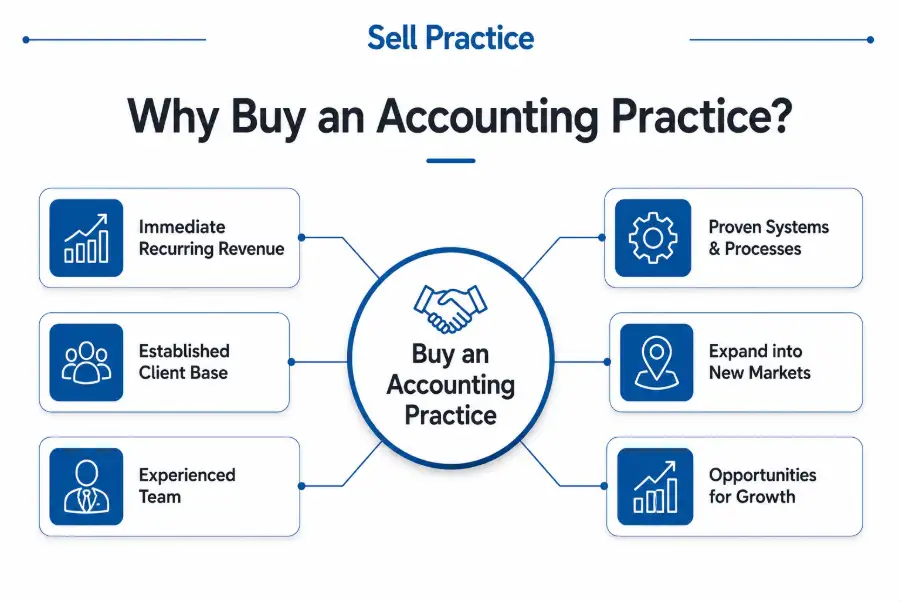
Growing organically takes time. Building a client base, hiring staff, and establishing a reputation can take years. Acquiring an existing accounting practice allows you to accelerate that growth by purchasing a business with proven income and an established market presence.
Some of the key benefits include:
- Immediate recurring revenue
- An existing portfolio of clients
- Experienced employees
- Established systems and processes
- Opportunities to expand geographically
- Cross-selling additional services
For many firms, buying a practice is a more predictable growth strategy than relying solely on winning new clients.
Is Buying an Accounting Practice Right for You?
Before searching for opportunities, consider whether acquiring a practice aligns with your long-term business goals.
Ask yourself:
- Do you want to grow your existing firm?
- Are you entering a new geographic market?
- Do you want to acquire specialist expertise?
- Do you have the financial resources to support an acquisition?
- Can your team successfully integrate another practice?
Having clear objectives will help you focus on opportunities that genuinely support your growth strategy rather than simply purchasing the first practice available.
Define Your Acquisition Criteria
Every accounting practice is different. Before beginning your search, establish the characteristics of the type of practice you want to acquire.
Important considerations include:
-
Location
Do you want a practice in your local area, or are you looking to expand into a different region of the UK?
-
Practice Size
Consider annual recurring fees, number of clients, and staffing requirements. Make sure the size of the practice aligns with your financial capacity, operational resources, and long-term growth plans.
-
Client Profile
Review the industries served, client size, and the balance between recurring and one-off work.
-
Services Offered
Some buyers look for practices specialising in tax, audit, payroll, bookkeeping, or advisory services, while others prefer a broader service offering.
-
Growth Potential
Look beyond current performance. Consider whether the practice offers opportunities to introduce new services, improve efficiency, or expand its client base.
Clearly defining your acquisition criteria makes it easier to identify practices that align with your long-term objectives.
Understand How Accounting Practices Are Valued
Before making an offer, it’s important to understand how accounting practices are typically valued. Although valuation methods vary, buyers generally assess several factors rather than relying on a single formula.
These include:
- Annual recurring fees
- Profitability
- Client retention
- Client concentration
- Quality of recurring income
- Staff experience
- Owner dependency
- Growth opportunities
- Market demand
A practice with diversified clients, strong recurring revenue, and efficient operations will often command a higher valuation than a similar-sized practice with greater operational risk. Rather than focusing solely on the purchase price, buyers should consider the long-term value the practice is expected to generate.
Financing Your Purchase
Buying an accounting practice requires careful financial planning. Depending on the size of the acquisition, buyers may finance the purchase using one or a combination of the following:
- Existing business reserves
- Commercial finance
- Bank lending
- Vendor financing
- Earn-out arrangements
- Investment partners
Before making an offer, prepare realistic financial forecasts that include:
- Purchase costs
- Integration costs
- Working capital requirements
- Expected return on investment
- Cash flow projections
Having finance arranged before entering negotiations also strengthens your position with sellers.
Finding the Right Accounting Practice
Not every practice available for sale will be the right fit. Finding the right opportunity requires more than comparing revenue figures. Buyers should also assess cultural fit, client demographics, growth potential, and compatibility with their existing business.
Practices can be sourced through:
- Specialist practice brokers
- Professional networks
- Industry contacts
- Direct approaches
- M&A advisers
Many of the highest-quality opportunities are marketed confidentially through specialist brokers rather than publicly advertised. Working with a broker also provides access to practices that closely match your acquisition criteria while maintaining confidentiality throughout the process.
Conducting Due Diligence
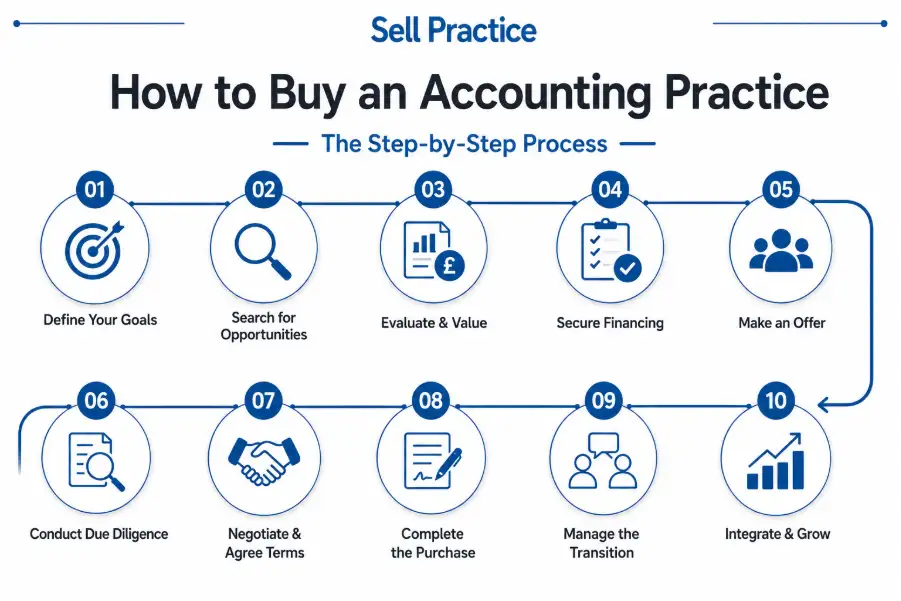
Once you’ve identified a suitable practice and agreed on the key commercial terms, the next step is due diligence. This is your opportunity to verify the information provided by the seller and assess any potential risks before completing the purchase.
A thorough due diligence process should cover the financial, operational, legal, and regulatory aspects of the practice. The goal is to confirm that the business performs as expected and that there are no hidden issues that could affect its future performance.
Areas to review include:
- Historical financial statements
- Recurring revenue and profitability
- Client concentration
- Staff structure and employment contracts
- Compliance documentation
- Practice management systems
- Existing contractual obligations
- Outstanding liabilities or disputes
Taking the time to complete comprehensive due diligence helps you make informed decisions and reduces the likelihood of unexpected issues after completion.
Negotiating the Purchase
Negotiation is about more than agreeing on a purchase price. The structure of the deal can be just as important as the valuation itself.
Points commonly negotiated include:
- Purchase price
- Payment terms
- Earn-out arrangements
- Seller involvement during the transition
- Non-compete agreements
- Completion timetable
A well-structured agreement should protect the interests of both parties while supporting a smooth transfer of ownership. Seeking professional legal and financial advice during negotiations can help ensure that the final agreement reflects your commercial objectives.
Planning the Transition
The completion of the sale marks the beginning of the integration process rather than the end of the transaction. A carefully planned transition helps maintain client confidence, supports employee retention, and allows the practice to continue operating with minimal disruption.
Key areas to consider include:
-
Client Communication
Introduce yourself to clients in a timely and professional manner. Reassure them that service quality and continuity will remain a priority.
-
Staff Integration
Meet with employees early to explain the transition, outline future plans, and address any concerns they may have.
-
Operational Integration
Review systems, workflows, reporting procedures, and technology to ensure a smooth integration with your existing practice.
-
Knowledge Transfer
Where appropriate, agree on a handover period during which the seller remains available to introduce key clients, transfer operational knowledge, and support the transition. A structured transition plan significantly improves the likelihood of retaining both clients and employees following the acquisition.
Buyer Acquisition Checklist
Before completing the purchase, ensure you have covered the following areas.
| Stage | Key Actions |
| Define objectives | Identify your growth strategy and acquisition goals |
| Practice search | Find opportunities that match your criteria |
| Practice valuation | Understand the business’s market value |
| Financial review | Assess revenue, profitability, and cash flow |
| Client review | Analyse client quality, concentration, and retention |
| Due diligence | Review legal, operational, and compliance records |
| Negotiate terms | Agree purchase structure and payment terms |
| Transition planning | Prepare client, staff, and operational integration |
This checklist provides a practical framework for buyers and helps ensure that no critical stage is overlooked during the acquisition process.
Why Work with Sell Practice?
Finding and purchasing the right accounting practice can be a complex process, particularly for first-time buyers. Working with a specialist broker provides access to market knowledge, qualified opportunities, and professional guidance throughout the transaction.
- At Sell Practice, we support buyers by:
- Identifying suitable acquisition opportunities
- Providing confidential introductions
- Facilitating practice valuations
- Coordinating due diligence
- Supporting negotiations
- Assisting with transition planning
Our sector-specific expertise helps buyers make informed decisions while reducing the risks associated with acquiring an accounting practice.
Conclusion
Understanding how to buy an accounting practice is essential for making a successful acquisition. From defining your objectives and evaluating potential opportunities to completing due diligence and planning the transition, each stage contributes to the long-term success of the investment.
Buying the right practice can provide immediate recurring revenue, an established client base, and a strong platform for future growth. However, achieving the best outcome requires careful planning, informed decision-making, and expert guidance throughout the process.
If you’re considering buying an accounting practice in the UK, Sell Practice can help you find the right opportunity, navigate the acquisition process, and complete your purchase with confidence.